
Kitchen Oven Safety: A Complete Guide
A few years back, a friend of mine left a tray of cookies in the oven and walked to the other room to answer a phone call. By the time he came back, the cookies had turned to charcoal and the smoke detector was going off. Nothing catastrophic, but it was a reminder that most oven accidents aren't some dramatic explosion. They're small, ordinary moments where someone stops paying attention for thirty seconds.
That's the thing about oven safety. It's just a set of simple habits that, when skipped, add up fast.
The Unattended Oven Problem
Leaving the oven running while you're not in the room is one of the most common ways kitchen fires start. Food bubbles over, spills onto a heating element, or simply gets forgotten, and within minutes a small spill becomes a flame. The fix is straightforward: use a timer, keep an eye on the food through the oven window, and don't walk more than a few steps away while something is cooking.
If you absolutely must step out of the kitchen, turn the oven off. For gas models, that means listening for the flame to go out and confirming the dial is fully on "Off." For electric ovens, wait for the hot surface indicator to go dark before you leave.
Grease, Foil, and the Stuff You Shouldn't Put In There
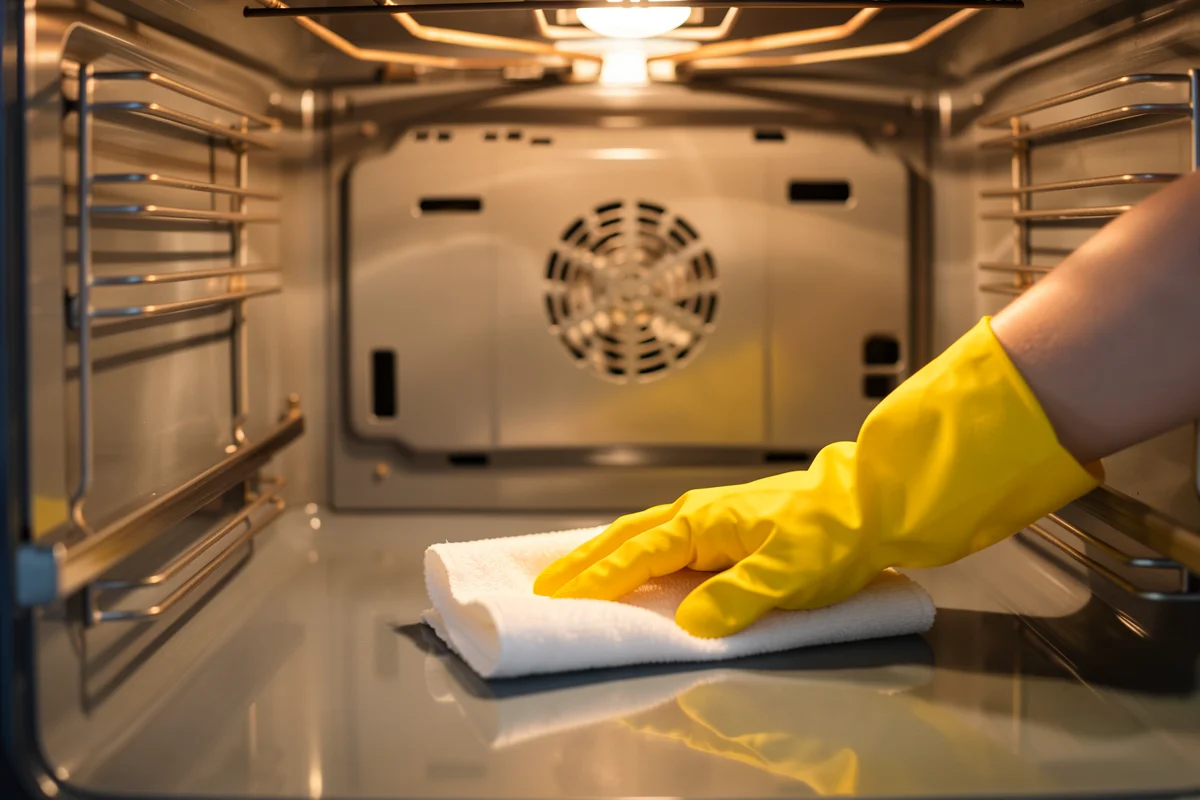
Grease and food residue are quiet fire starters. When spills sit in the bottom of an oven and get reheated over and over, they can smolder, smoke, or ignite. The cleaning schedule that prevents this is simple: wipe up fresh spills after each use, and do a deeper clean every one to three months depending on how often you cook.
Aluminum foil is another common mistake. Lining the bottom of an oven with foil blocks the airflow the oven needs to distribute heat evenly. That trapped heat can overwork internal components or even melt parts that aren't designed to handle it. If foil is needed, place it on a baking tray, tent it over food to prevent over-browning, and keep it well clear of heating elements and fan vents.
And then there's the stuff that shouldn't be stored inside the oven at all. Plastic containers, paper towels, cardboard, non-oven-safe pans, cookware with wooden handles or plastic trim. Any of these can ignite if someone accidentally turns the oven on.
Burns: The Real Risk Most People Underestimate
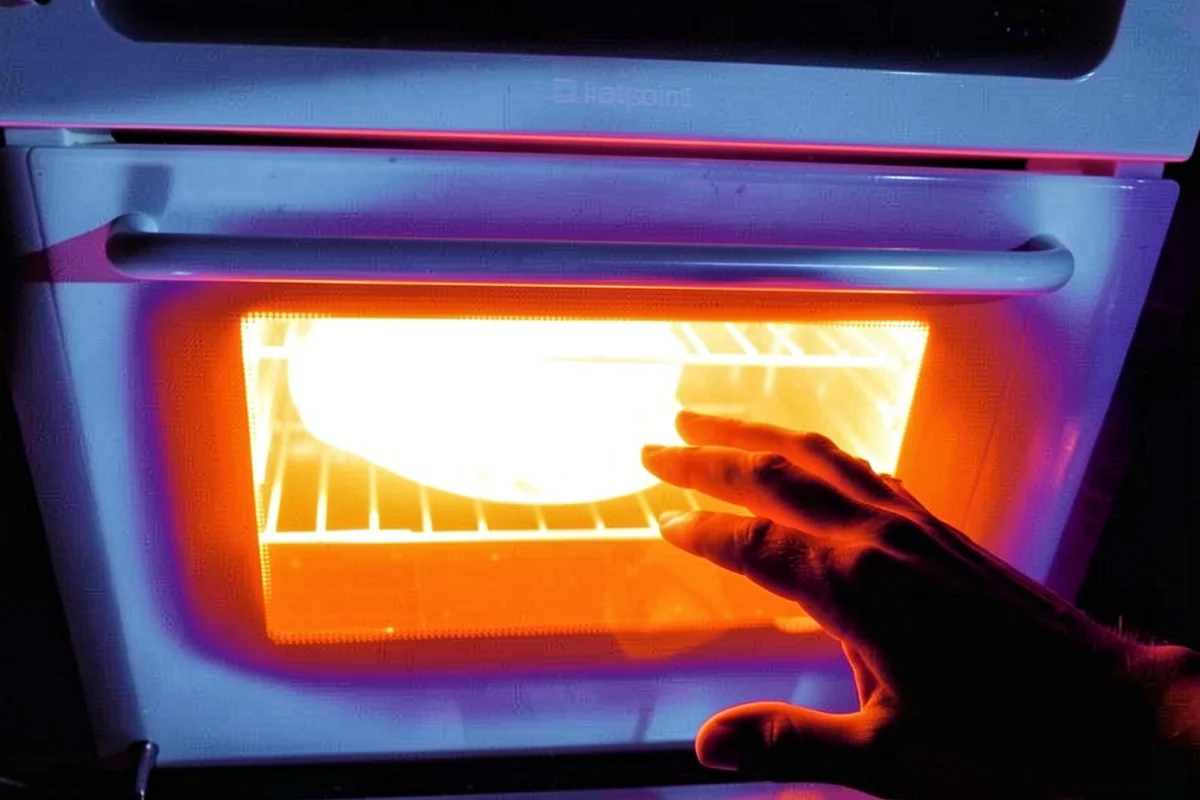
Here's a stat that surprises a lot of people. According to a 2020 NFPA report, most burns associated with cooking equipment come from contact with a hot object or liquid, not from fire or flame. Ranges and ovens are the most common source of those burns.
That means the danger isn't just a grease fire. It's reaching for a hot rack, grabbing a pan without proper mitts, or getting hit by a wave of steam when the door opens. Burns happen fast, and they happen to people who weren't being careless. They just weren't paying attention for one second.
Children are hit disproportionately hard by this. NFPA data shows that kids make up only 6 percent of the population but account for a much larger share of non-fire burn injuries from cooking equipment. A curious hand on a hot glass door. A child pulling a pot handle. These are the moments that turn a Tuesday afternoon into an emergency room visit.
What the Standards Actually Require
UL 858, the standard for household electric ranges, sets specific limits on how hot the outside of an oven can get. For surfaces less than 31 inches above the ground, bare or painted metal must not rise more than 33 degrees Celsius (59 degrees Fahrenheit), and plastic surfaces must not exceed 51 degrees Celsius (92 degrees Fahrenheit) during normal operation. That's not just a nice-to-have. It's the baseline that keeps the exterior of the appliance from becoming a burn hazard for the people walking past it.
When the Fire Starts: What to Do and What Not to Do
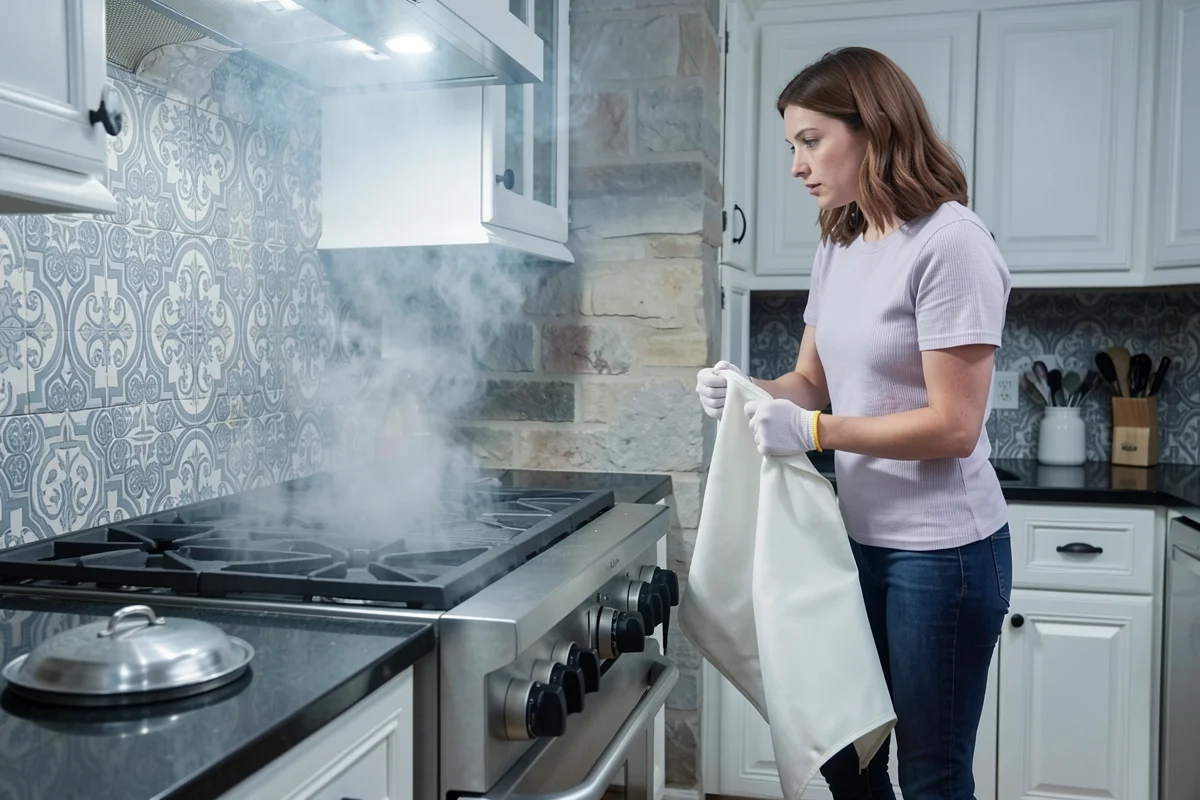
This is the part people get wrong most often. If a grease fire breaks out inside the oven, the first move is to keep the door closed. That cuts off the oxygen the fire needs. Turn the oven off. Do not pour water on the flames. Water causes oil to splash and spread the fire.
If the fire doesn't go out on its own, evacuate the house and call emergency services. A fire extinguisher is a last-resort option, but a fire blanket is often the better choice because it leaves your kitchen clean. And if you're smothering the flames, use a metal lid or baking soda. Not flour. Flour particles can actually explode and make the situation worse.
Keeping Kids Safe Around the Oven
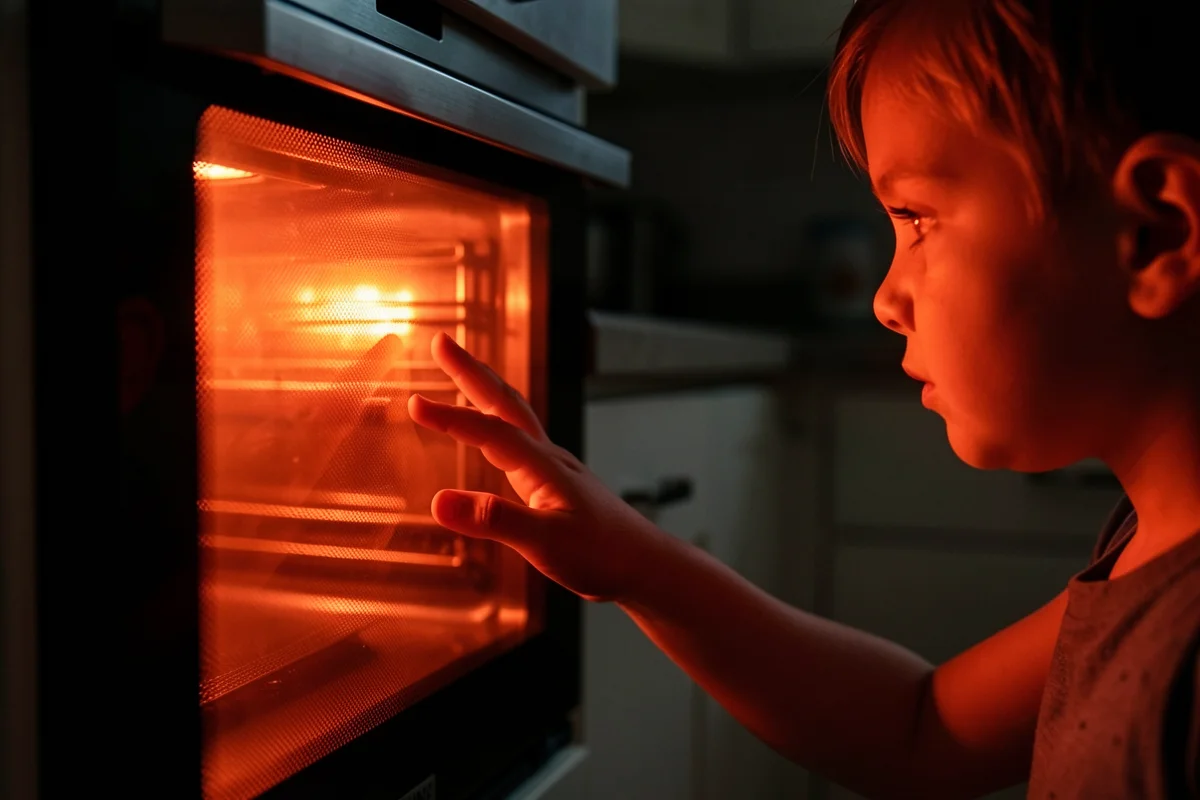
Teaching children about oven safety isn't just about saying "don't touch." Kids between 8 and 10 develop the prefrontal cortex capacity to inhibit impulsive responses more reliably, which makes that age range a natural entry point for hands-on oven work. But even at that age, the lesson needs to be specific. A ready child doesn't just say "the oven is hot." They say "the rack is hot" or "steam comes out when you open the door".
Practical steps include:
- Installing knob covers on gas ranges so a child can't turn on the flame
- Using an oven door latch to keep the door shut, especially during self-clean cycles
- Keeping children away from the oven while it's in use and never leaving them unattended in the kitchen
- Using silicone or quilted oven mitts that cover the wrist, since flat pot holders leave the wrist and forearm exposed to rack burns and steam
Many wall ovens come with child safety locks built in. If yours does, use them.
Maintenance: The Boring Part That Saves Your Kitchen
Annual inspections by a qualified technician are recommended to check for faulty wiring or malfunctioning components, especially in wall ovens. It's not glamorous work, but catching a frayed cord or a failing heating element before it becomes a fire is worth the appointment.
There are also signs that an oven is past its prime and should be replaced:
- Constant recurring repairs where the same problems keep coming back
- Inability to hold a steady temperature
- Scorch marks or hot spots visible on the exterior
- Safety features like auto shut-off or locked doors no longer working
If the oven is making buzzing sounds, sparking, or smelling off, stop using it and get it checked. Ignoring those signs can turn a small electrical issue into something much worse.
Gas Ovens and the Invisible Threat
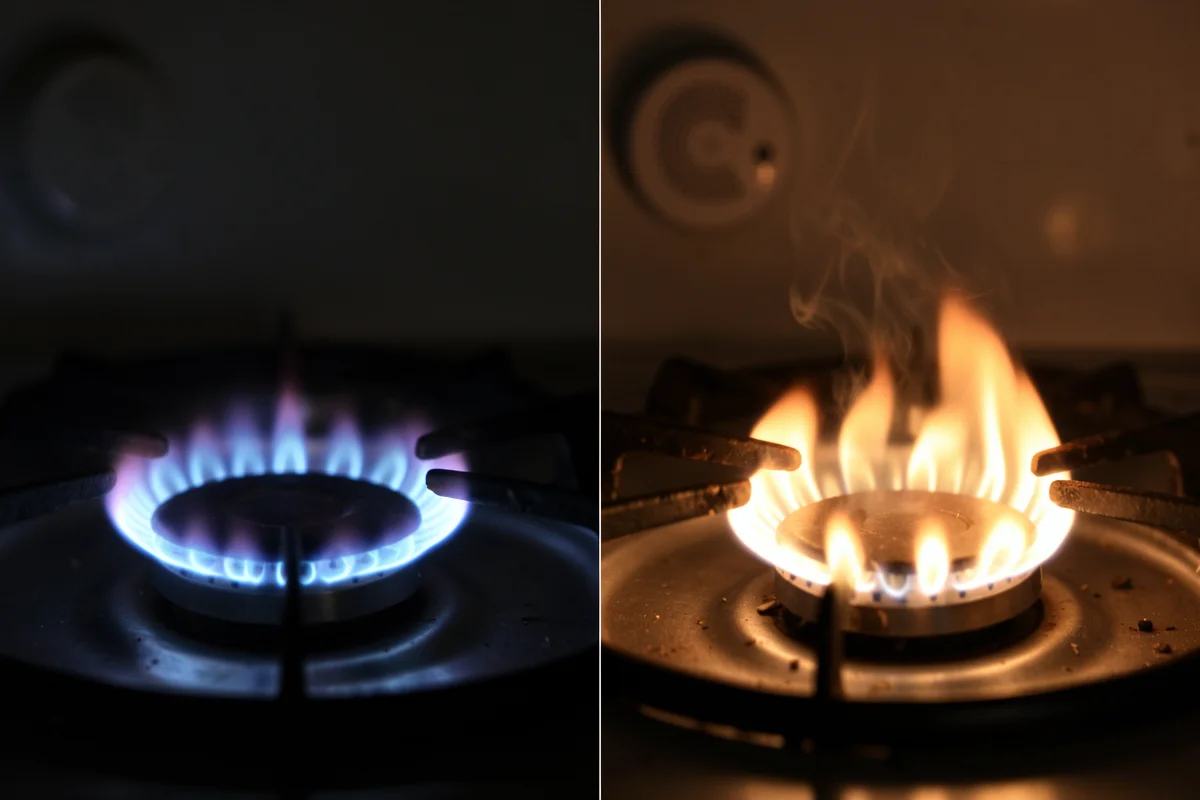
Gas ovens carry a risk that electric models don't: carbon monoxide. It's invisible, odorless, and builds up quietly in a poorly ventilated kitchen. A yellow or orange flame instead of a clean blue one is a sign the gas isn't burning properly and could be releasing CO.
Using a gas oven to heat a home is a dangerous practice. The oven isn't designed to run with the door open for extended periods, and the carbon monoxide it produces can accumulate without anyone noticing. If you see black soot marks around the vents, or if you get a headache every time you bake, turn the oven off and get fresh air.
A carbon monoxide detector in the kitchen, placed at least 15 feet from the stove to avoid nuisance alarms, is a cheap piece of insurance.
Smart Ovens and Modern Safety Features
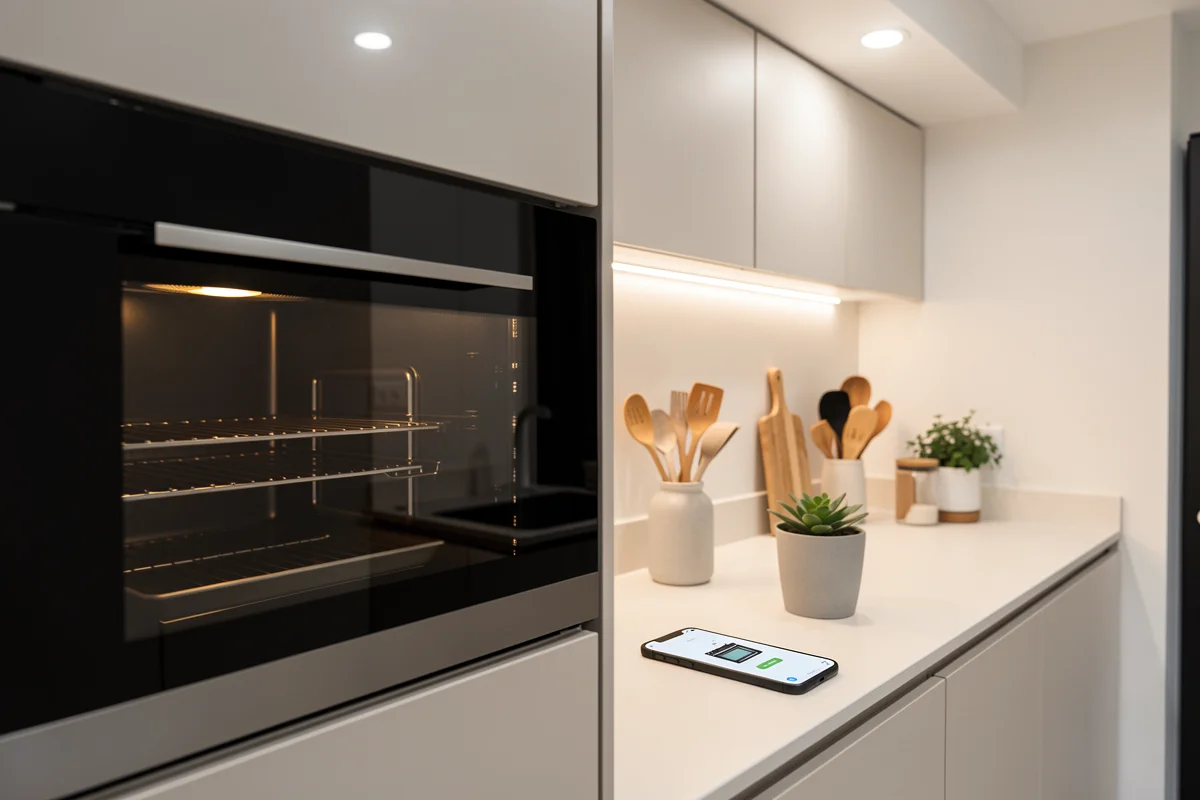
Newer ovens come with features that genuinely reduce risk. Some have internal cameras that can detect charring and send a notification to your phone while automatically lowering the heat. Induction-paired ovens stay cooler to the touch than traditional ranges, which cuts down on the burn risk for anyone reaching past the appliance.
Voice control is another option. For someone with limited mobility or messy hands, being able to say "turn off the oven" without reaching for a hot surface is a real safety improvement.
That said, smart features don't replace basic attention. Just because you can control the oven from your phone doesn't mean you should rely on it completely. Double-check the oven in person, especially before leaving the house.
The Self-Clean Cycle: A Caution
Self-cleaning oven cycles can reach temperatures above 800 degrees Fahrenheit. They should only be run when someone is home and alert, with good ventilation and all items removed from the oven. The heat generated during that cycle can damage nearby cabinets and release fumes that are hard on the lungs. Newer models offer steam cleaning as a lower-heat alternative, which is easier on both the kitchen and the people in it.
A Few Habits That Cover Most of the Risk
None of this requires fancy tools or constant vigilance. Wipe up spills after you cook. Turn the oven off and confirm it's actually off. Keep towels and paper away from the appliance. Teach kids what's hot and what isn't, and be specific about it. Check the flame color on a gas oven. Clean the grease before it builds up.
Small things. But they're the difference between a kitchen where you cook and a kitchen where something goes wrong.